16 Nov Design Trends 2027: 7 Ways to Create a Happier, Smarter Workplace
With just one month of 2026 left, we’ve been thinking about what next year will mean for workplace design.
As designers, we’re particularly interested in how AI, changing workstyles and a greater focus on wellbeing will shape the offices of 2027.
Will the focus be on better technology? More flexibility? Somewhere to escape the screens for five minutes? How about all three?
As businesses plan for 2027, they’re facing new challenges: AI is changing what people do, employees are being asked to learn new skills – and the pressure to improve productivity isn’t going away.
Meanwhile, your human team is yearning more than ever for comfort, connection, a sense of purpose and the freedom to do their jobs well.
Where does workplace design fit in? It has a huge role to play.
And CEOs agree. According to recent Steelcase research, 96% of surveyed business decision-makers plan to update their workplaces within two years.
But creating a better office isn’t just about integrating the latest tech and adding trending furniture. As always, it’s about the people. By understanding how work is changing, you can deliver spaces that help people thrive.
Here are seven shifts we think every CEO should have on their radar.
1. As AI Takes on More Tasks, Offices Will Need to Support More Human Thinking.
According to the World Economic Forum’s Future of Jobs Report 2025, 86% of surveyed employers expect AI and information-processing technologies to transform their businesses by 2030.
And JLL’s 2026 Future of Work Survey found that 60% of senior business leaders expect AI to reinvent human roles rather than replace them. What does this mean for office design?
If technology can take on more routine work, the value of bringing people together lies in what humans do best: coming up with new ideas, being responsive, solving problems, mentoring colleagues, exercising judgments and building relationships.
The Design Response
Think beyond the traditional workstation. Future-ready offices should offer a variety of environments for different types of thinking and interaction:
- Quiet spaces for deep concentration and complex decisions
- Flexible project rooms where teams can develop and test ideas
- Comfortable areas for informal conversations and mentoring
- Technology-enabled meeting spaces that make collaboration easier, not more complicated
CEOs don’t need to fill every corner with technology. The best workplaces align technology, people, and physical spaces to enable better ways of working.
The CEO Question
If AI changes what your employees spend their time doing, will your current floor plan still make sense?
2. The Office Could Become Your Company’s Most Valuable Learning Hub
What if your office went from hosting occasional training sessions to being a workplace that offered continuous learning?
The World Economic Forum predicts that 39% of workers’ existing skillsets will change or become outdated between 2025 and 2030.
Its research also finds that 77% of employers plan to upskill or reskill their employees in response to AI.
That’s a big challenge for leadership teams.
Employees won’t just need to learn how to use new technology. They’ll need opportunities to share knowledge, develop leadership skills, collaborate across departments and learn from more experienced colleagues.
And much of that learning happens through human interaction.
So why are so many offices still designed as though learning only takes place in a conference room?
The Design Response
Imagine a workplace with:
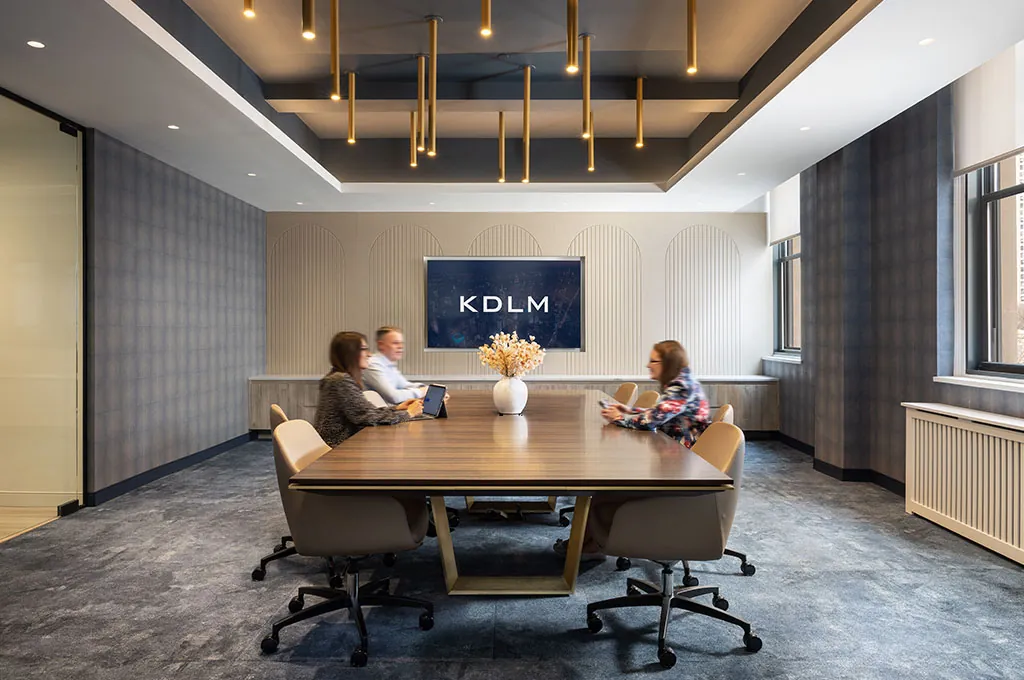
- Adaptable training rooms that accommodate workshops, presentations and smaller group sessions
- Informal learning lounges where colleagues can share knowledge
- Small mentoring spaces for one-on-one conversations
- Project areas where employees can work through new challenges together
- Integrated screens and collaboration tools that support hands-on learning
Good news is, this doesn’t have to mean adding square footage.
A flexible meeting room can host a team briefing in the morning, an AI workshop after lunch, and a mentoring session later in the day. It’s about using the space you have more effectively.
The CEO Question
If developing your people is a business priority for 2027, does your office actually make learning easy?
3. Employee Wellbeing Will Be About Choice, Not One-Size-Fits-All Design
Gensler’s 2025 Global Workplace Survey found that employees with a high degree of choice in where and how they work were 2.5 times more likely to say their workplace supports both individual and team productivity.
They were also nearly three times more likely to consider their office a great place to work. A powerful reminder for CEOs that people don’t all work in the same way.
Some employees thrive in lively, collaborative environments. Others need quiet to concentrate. Some prefer natural light and open spaces; others benefit from greater privacy and fewer distractions.
The Design Response
The best workplaces will offer different environments, for employees of different ages, personalities and sensory needs, within the same office.
Design features to consider:
- Acoustically-protected focus rooms
- Comfortable collaboration areas
- Private phone booths
Low-stimulation spaces where employees can step away from busy surroundings.
Lighting, furniture, temperature and acoustics also matter. Where practical, giving employees some control over their immediate environment can make the workplace more comfortable and usable.
The CEO Question
How much choice do your employees actually have once they walk through the office door?
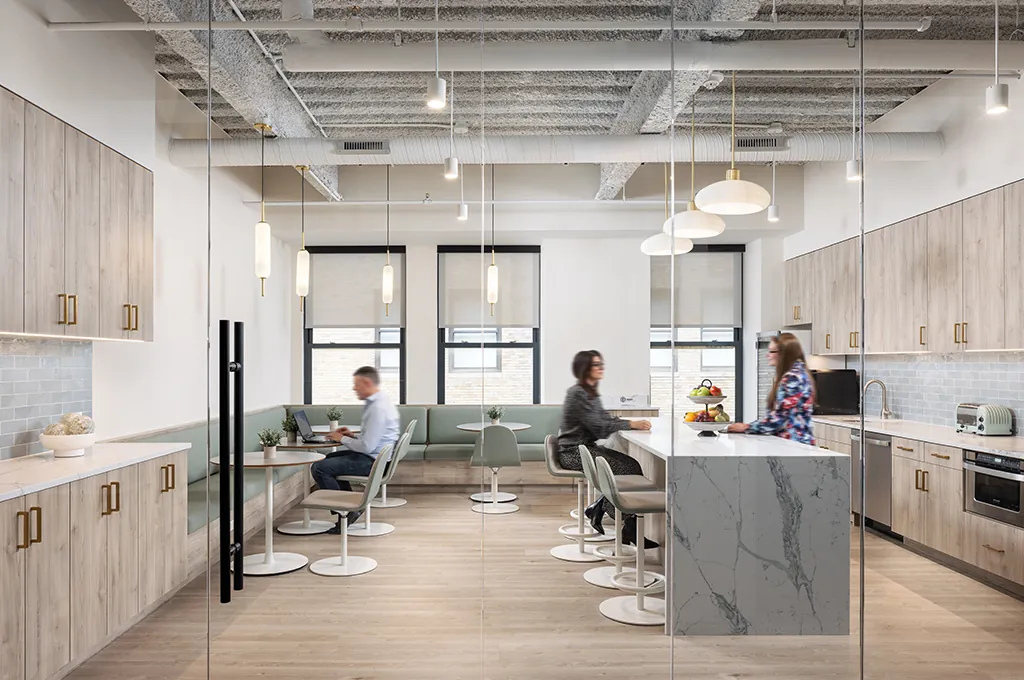
4. More Technology Could Mean More Demand for Screen-Free Spaces
In an always-connected office, it’s important to make space for switching off.
As businesses introduce more AI, digital tools and connected technology, employees need more opportunities to step away from their screens.
Once upon a time this could have looked like introducing a pool table. But in 2027 CEOs need to go further – giving employees thoughtfully designed spaces for genuine change of environment.
The research backs this idea up. The Occupational Safety and Health Administration (OSHA) advises that prolonged computer use can contribute to visual fatigue and physical discomfort. Its workstation guidance recommends regular breaks, changes in posture and time away from screens.
Are we saying the workplace of 2027 could benefit from a little more analog thinking? We certainly are!
The Design Response
Can you introduce a quiet reading corner with comfortable seating? A welcoming café where people can catch up without opening a laptop? A wellness room where employees can take a few minutes to recharge?
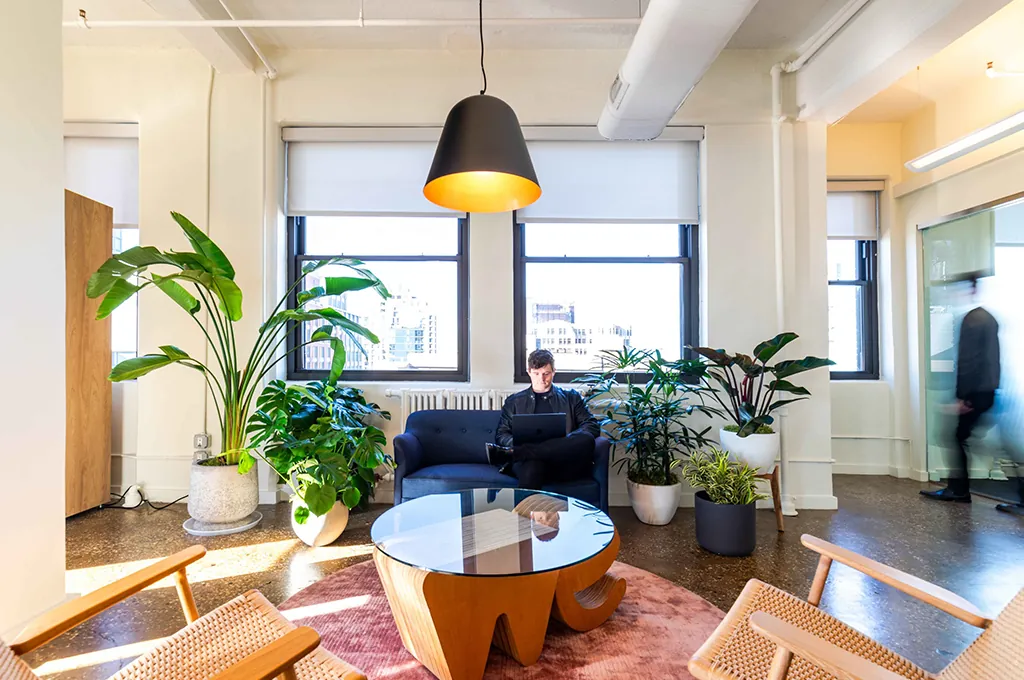
Or just a comfy spot near a window, with natural materials, greenery and somewhere to sit away from the main workspace?
The changes don’t have to be big and expensive. The important thing is creating “moments” where employees can change pace, move around and take a break from what’s digital.
In terms of layout, you can incorporate spaces like the above into any underused areas of your workplace.
The CEO Question
Where can your employees go when they need five minutes away from their screens?
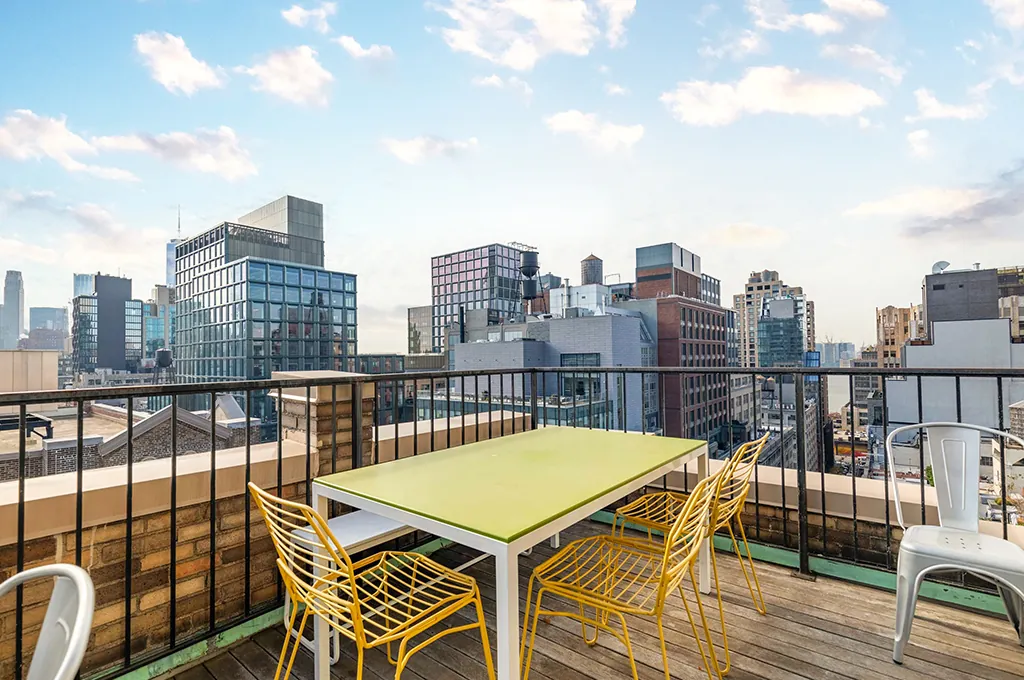
5. Your Office Needs to Earn the Commute More Than Ever
JLL’s 2025 Workforce Preference Barometer, based on 8,700 office workers across 31 countries, found that almost 40% believed their office experience could be improved.
Employees highlighted issues including acoustic comfort, ergonomics and amenities.
And in Gensler’s 2025 survey, employees who rated their workplaces highly were nearly three times more likely to say they intended to stay with their company.
An attractive office won’t solve retention challenges by itself, but it does need serious debate in conversations with your leadership team, especially when employees have experienced the comfort and convenience of working from home.
The Design Response
This is where hospitality-inspired workplace design comes into effect.
- Warm, welcoming reception areas
- Comfortable lounge seating
- Inviting cafés
- Natural materials
- Softer lighting for a less institutional feel
But the ‘look’ of your workspace is only the first step. The second is about offering employees what they can’t get from home – in-person collaboration, access to colleagues, mentoring, shared experiences and a sense of belonging.
The best offices combine comfort and flexibility with the energy and connection of being together.
The CEO Question
What does your office offer employees that makes the journey worthwhile?
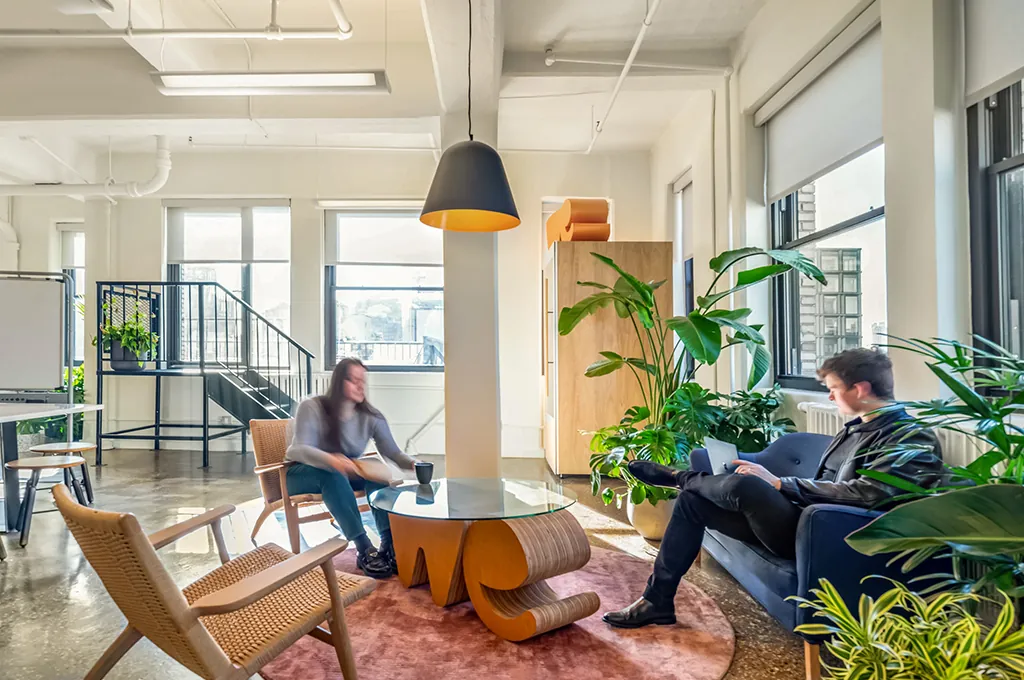
6. Flexibility Matters More Than the Number of Desks
If there’s one thing we’ve learned in the aftermath of the pandemic is that workplaces need to be incredibly agile.
Hybrid attendance, new technology, changing team structures and evolving business priorities all change how office space is used now.
But we’re still seeing many businesses operating within layouts designed for the pre-Covid era.
JLL’s 2026 workplace research found that 51% of office time is now spent on focused work.
At the same time, it reports that many employers are prioritizing collective spaces over individual work settings.
It’s a reminder that the office needs to support more than one kind of activity.
You can have meeting rooms that are constantly booked while entire rows of desks sit empty. Or a busy open-plan office where employees struggle to find somewhere private to take a call. Neither necessarily means you need a bigger office – just a better mix of space.
The Design Response
Start by understanding how people actually use the workplace. Consider:
- Which areas are busy?
- Which are ignored?
- Where are employees struggling to find the right environment?
You don’t need a complete renovation to switch things up. Flexible furniture, multi-purpose rooms, adaptable collaboration areas can help you offer a balance of spaces.
For NYC and Tri-State-area CEOs navigating expensive office real estate, this is important to remember.
The CEO Question
Are you paying for the space your people need, or the space your old floor plan says they need?
7. The Happiest Workplaces Will Put People Before Trends.
The ongoing shift as we move into 2027, is going beyond designing offices to look impressive – to creating workplaces that genuinely support people.
As for 2027 design trends themselves, we’re seeing:
- Warmer color palettes
- Natural textures
- Curved furniture
- Lots of greenery
- Natural light
- Softer lighting
- Interiors that feel more like hospitality than corporate office spaces
While we love the above, we know from experience that a beautiful office doesn’t always mean a productive one.
- A stylish lounge that nobody uses isn’t delivering much value.
- An impressive open-plan layout where people can’t concentrate isn’t a benefit
- A trendy café won’t compensate for technology that never works.
Design decisions need to connect directly to the needs of your team. This is so important – especially when employee engagement remains under pressure.
Gallup’s State of the Global Workplace 2026 research found that manager engagement fell to just 22% in 2025, down from 27% the previous year. Workplace design can’t fix everything – leadership, workload, culture and management practices all play major roles – but well-considered design will prevent everyday frustrations and give people better spaces to focus, connect and recharge.
The Design Response
Before choosing finishes or furniture, ask your employees what they like. Use their insights to shape your workplace design plans.
Maybe the team needs more privacy rather than more desks.
Perhaps an underused area could become a learning hub.
Could a more welcoming café encourage the informal conversations that help colleagues feel connected?
Beautiful materials, pops of color, comfortable furniture and distinctive design are all important but their real job is to contribute to a workplace that works better.
The smartest and happiest workplace in 2027 doesn’t need to be the one with the best tech and biggest budget – it’s the one thoughtfully designed around the people who use it.
The CEO Question
Are you designing for how your workplace looks, or how your team experiences it?
Your 2027 Workplace Checklist: Five Questions Every CEO Should Ask
Before committing to a relocation, renovation or new workplace strategy, ask yourself:
- Are we ready for AI? Does our office support the human skills and interactions that will become increasingly important?
- Are we making learning easy? Do employees have suitable spaces for mentoring, training and sharing knowledge?
- Are we supporting different workstyles? Can people choose where to concentrate, collaborate, socialize or recharge?
- Are we making every square foot count? Is our layout based on how employees actually use the office today?
- Would our people choose to be here? Does the workplace offer comfort, connection and an experience worth the commute?
Perhaps you’ll find your office already does some of the above perfectly. Perhaps you’ll see how a few changes could make a big difference.
To Conclude: A Happier, Smarter Workplace Starts With Your People.
As we look toward 2027, one thing is increasingly clear: creating offices that create better experiences for your team is the route to success.
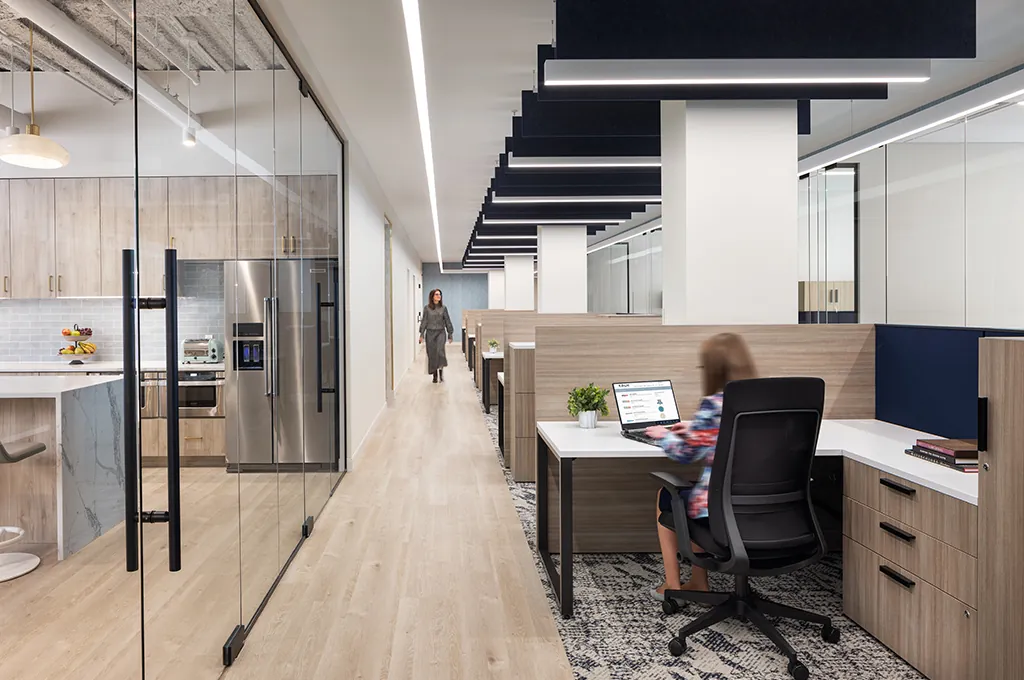
Planning your workplace for 2027?
Talk to the RI team about how to make your existing space work harder – and create a workplace your people will love spending time in.
At RI Workplace, we’ve spent more than 35 years helping businesses rethink how their offices look, feel and function.
From the first conversation and 3-D visualizations through to design and construction, our integrated team helps clients create workplaces that reflect their ambitions and support the people behind their success.