
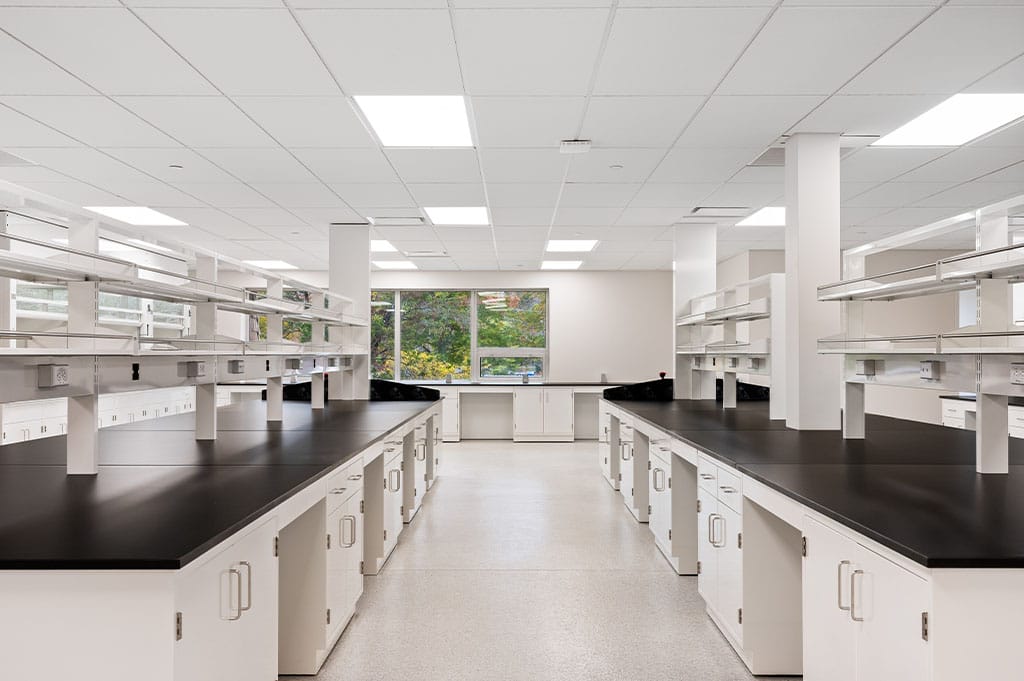
11 Jun Designing Pharma Workplaces: What CEOs Need to Know
Designing Pharma Workplaces: 6 Things CEOs Need to Know
From integrated headquarters and advanced lab environments to wellness-led workplace campuses, pharmaceutical companies are rethinking what their workplaces need to deliver.
At RI Workplace, we’ve recently partnered with pharmaceutical companies on projects including:
- A new 52,000-square foot headquarters and lab space for Aucta Pharmaceuticals
- A large-scale New Jersey pharmaceutical campus designed to support innovation, employee wellbeing, and future growth
While each project had different operational needs, both reflected a wider shift happening across the life sciences industry: workplaces are no longer just functional spaces, they’re strategic tools for attracting talent, supporting innovation, and improving business performance.
For CEOs, this isn’t just a facility conversation anymore – it’s a business one. Here are six essential insights.
1. Talent Is Driving Workplace Strategy
Talent has become one of the biggest drivers of workplace design in the pharmaceutical sector.
According to JLL, 57% of life sciences decision-makers cite attracting and retaining talent as a top priority. At the same time, hybrid working has raised expectations – employees are no longer coming into the office by default, so the workplace has to offer something more.
That means moving beyond purely functional environments to spaces that support:
- Comfort and wellbeing
- Collaboration and connection
- Focus and deep work
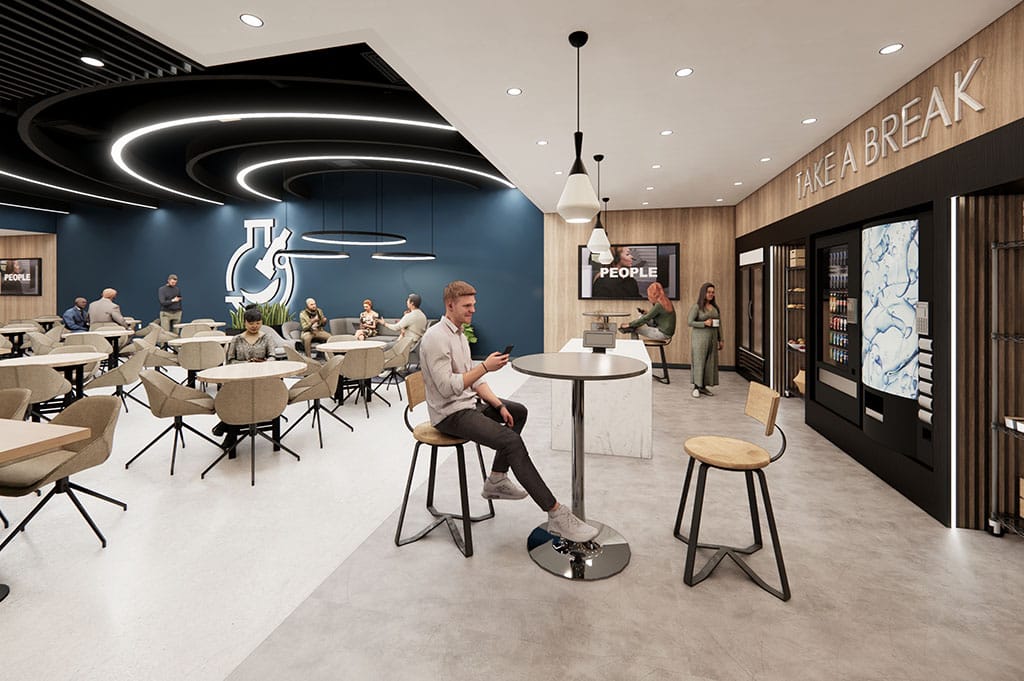
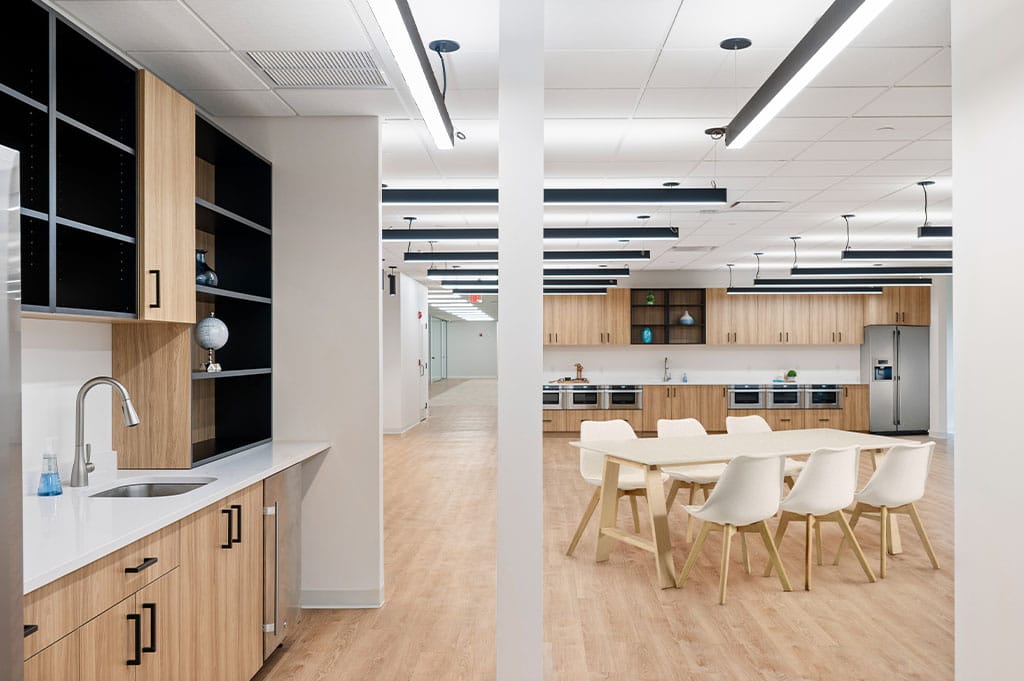
We’re seeing a clear shift toward amenity-rich workplaces, incorporating cafés, lounges, wellness spaces, and hospitality-inspired finishes, designed to create an experience employees actually want to come to.
In our recent confidential pharmaceutical campus project, this included designing:
- Wellness areas and quiet booths
- Multiple cafés and social spaces
- Ergonomic, tech-enabled workstations
- Biophilic elements and balanced lighting
Because increasingly, pharmaceutical companies understand that workplace experience directly impacts recruitment, retention, and performance.
2. The Rise of the Integrated Campus
As pharmaceutical companies grow, many are moving away from fragmented real estate strategies in favor of consolidated, integrated environments.
Bringing research, development, and corporate teams together under one roof enables:
- Faster decision-making
- Improved collaboration
- More efficient operations
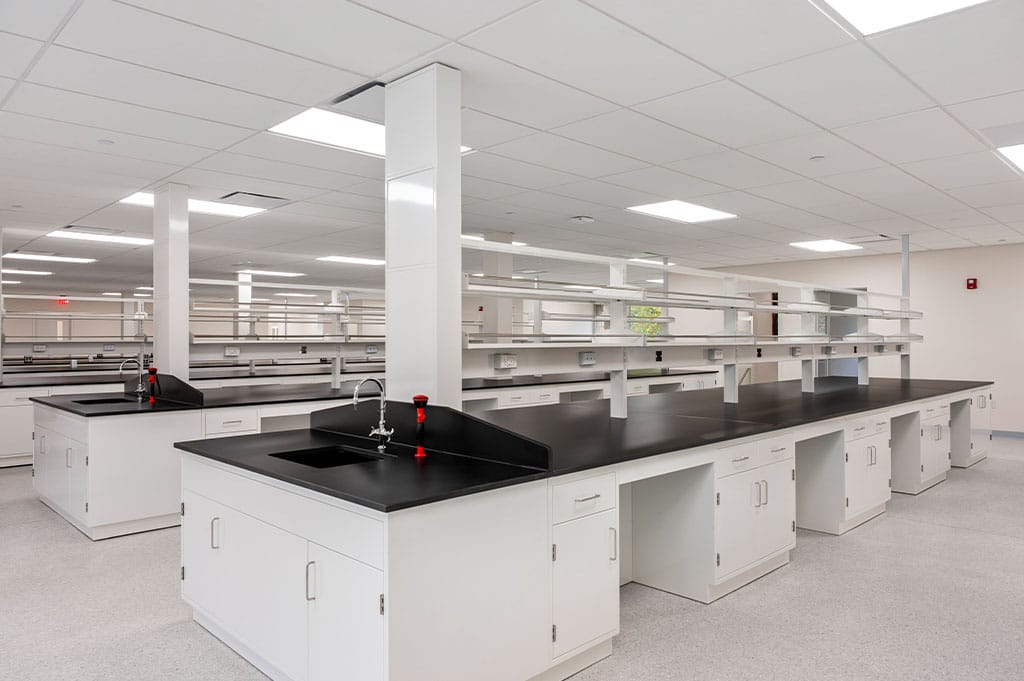
For Aucta Pharmaceuticals, this meant creating a 52,000-square foot headquarters and lab space that could support their long-term growth in the U.S. market.
The project combined:
- Research and development environments
- Administrative and executive offices
- Collaborative meeting spaces
- Employee amenities including cafés and lounges
The result was a unified workplace designed to support everything from scientific innovation to company culture.
3. Labs and Workplaces Are No Longer Separate
Traditionally, laboratory environments and office spaces have been treated as entirely separate worlds – one highly technical, the other more corporate.
That divide is disappearing.
Today’s pharmaceutical workplaces are being designed as connected ecosystems, where:
- Lab infrastructure supports cutting-edge research
- Office environments encourage collaboration and strategy
- Shared spaces improve communication across teams
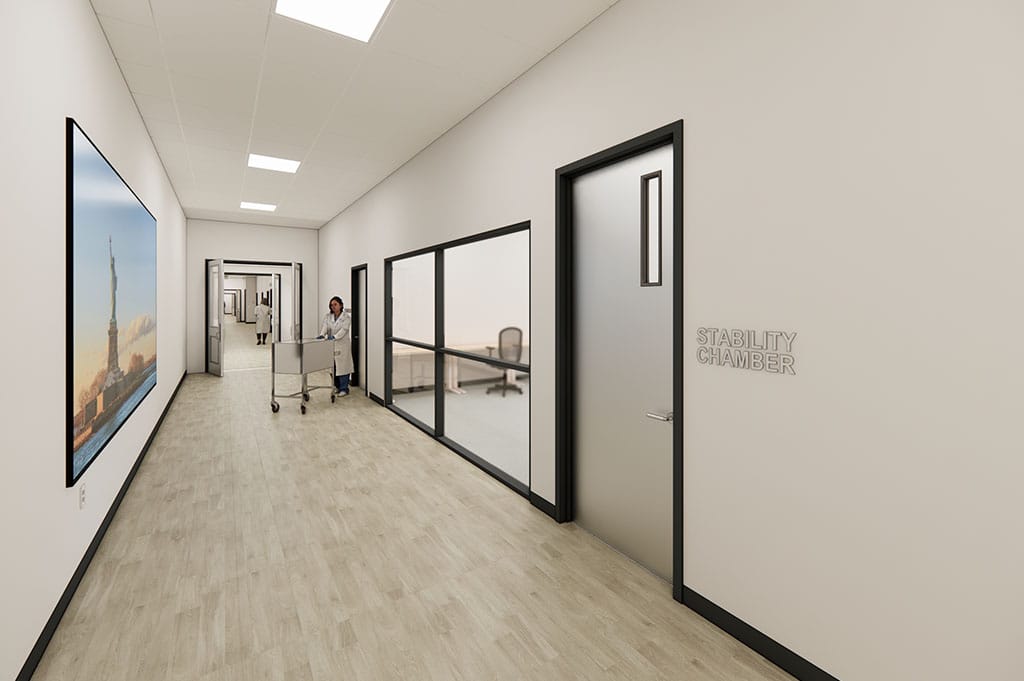
In our confidential pharmaceutical campus project, this meant designing a multi-floor environment that combined:
- QC labs and microbiology testing areas
- Clean rooms and gowning spaces
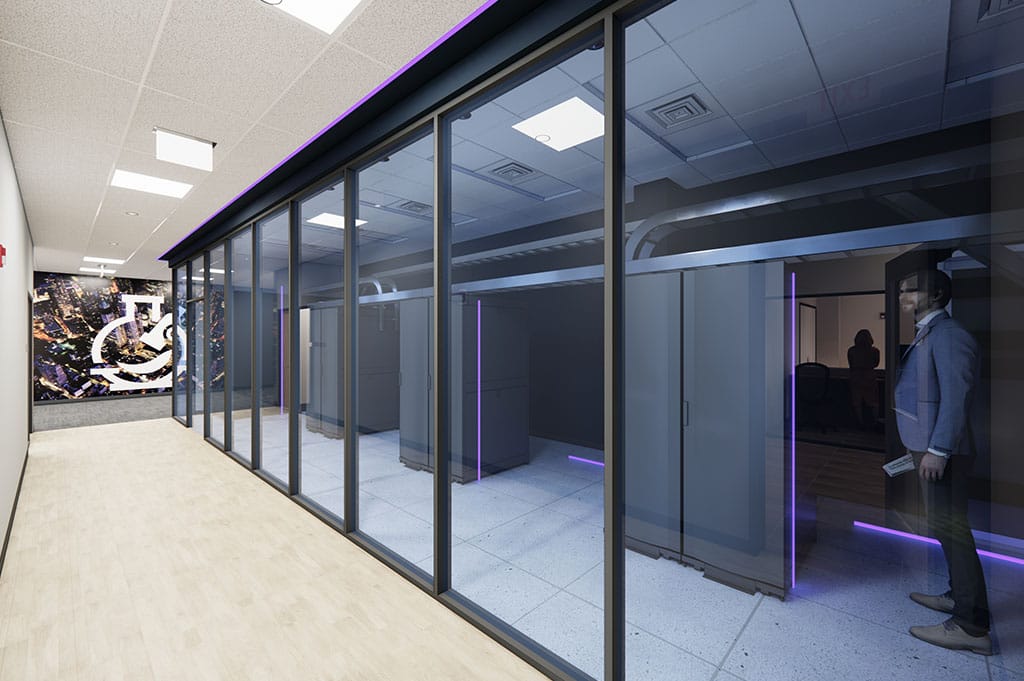
- Stability chambers and technical infrastructure
- Collaborative and social spaces
The result balanced pharmaceutical-grade precision with a more people-focused workplace experience.
4. Pharma Employees Expect More From the Office
The modern pharmaceutical workplace is no longer just about efficiency, it’s about experience.
Employees are comparing the office not only to other workplaces, but to:
- Home environments
- Hospitality spaces
- Flexible co-working settings
- That shift is influencing everything from layout to material choices.
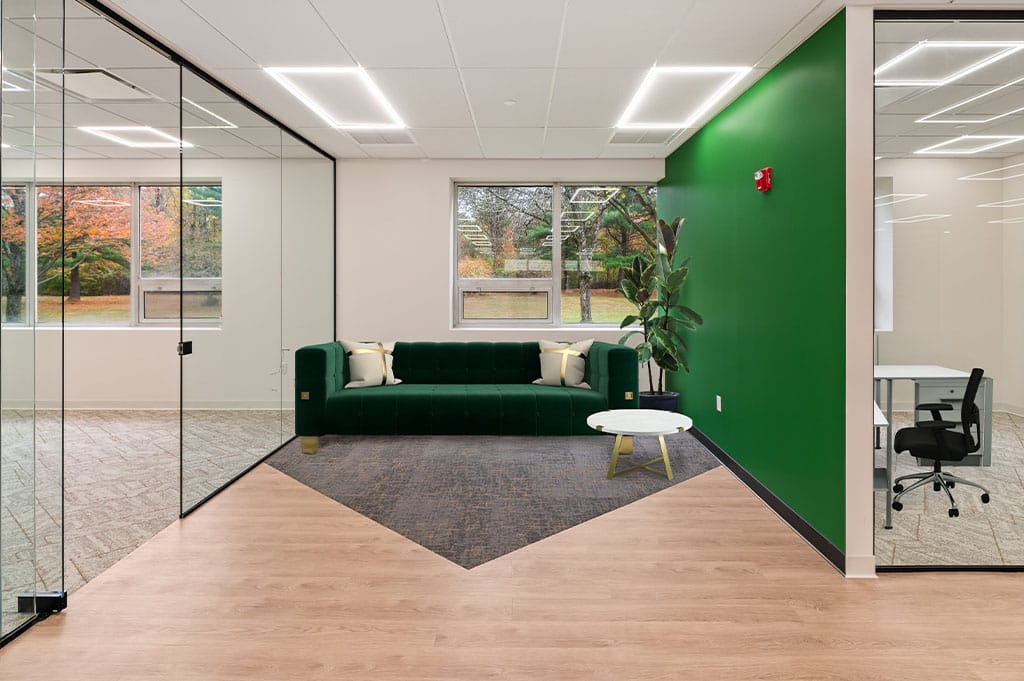
In practice, this means:
- More natural light and biophilic design
- Softer, hospitality-inspired finishes
- Spaces designed for movement throughout the day
- Environments that support both collaboration and quiet focus
At RI Workplace, this thinking informs our Workplace Retreat approach, creating spaces to energize, support, and motivate people to do their best work.
5. Flexibility and Future-Proofing Are Critical
With rapid advancements in AI, evolving therapeutic areas, and increasing global collaboration, pharmaceutical companies need workplaces that can adapt.
Research priorities shift, teams grow, and technologies evolve.
It’s why flexibility is becoming a core design principle:
- Modular lab environments
- Scalable infrastructure
- Multi-functional workspaces
- Adaptable technical systems
A workplace shouldn’t just support today’s operations, it should be designed for what comes next.
6. Great Workplace Strategy Needs Great Delivery
While workplace strategy is becoming more complex, one thing hasn’t changed: execution still matters.
Pharmaceutical environments come with unique challenges, from regulatory requirements to highly technical infrastructure, making coordination critical.
At RI Workplace, our integrated design-build approach allows us to deliver:
- Faster timelines
- Greater cost certainty
- Seamless coordination across trades
For Aucta Pharmaceuticals, this meant delivering a fully integrated headquarters and lab space in under 12 months, despite the scale and technical complexity of the project. Because in a fast-moving industry, speed to occupancy can be just as important as the design itself.
The Bottom Line
The pharmaceutical workplace is no longer just a place to house labs and offices.
It’s a strategic asset that impacts:
- Talent attraction and retention
- Innovation and collaboration
- Operational efficiency
- Long-term growth leading to life-saving treatments
Let’s Talk About What’s Next
If your pharmaceutical company is planning its next workplace move, now is the time to think strategically. Expectations around talent, innovation, collaboration, and operational performance have never been higher.
At RI Workplace, we’ve spent decades helping life sciences and pharmaceutical companies create environments that support research, growth, and employee experience, often under complex timelines and technical requirements.
The good news? With the right design-build partner, creating a future-ready pharma workplace doesn’t have to be complicated.