06 Mar Is Your Office Worth the Commute? The 223-Hour Workplace Question | RI Workplace
The 223-Hour Question: Is Your Office Worth It?
A recent analysis revealed that the average U.S. employee now spends 223 hours per year commuting – the equivalent of nearly six full workweeks.
In New York City, that number climbs closer to 300 hours annually. Researchers have described this as an “invisible pay cut” – not because salaries are changing, but because employees are once again giving up personal time to be physically present at work.
For leadership teams across NYC, this raises an important question: If your employees are giving back 223 hours a year, is the office giving them enough in return?
At RI Workplace, we believe this isn’t an HR debate. It’s a design question.
The Commute Is Back. Expectations Are Higher.
During the remote and hybrid shift, employees regained hours once spent on trains, subways, and highways. That time became family time, focus time, or simply breathing room in the day.
As more organizations increase in-office expectations, the workday effectively extends – even though compensation does not. This doesn’t mean returning to the office is wrong. It means the office has to perform better than it did before. Attendance alone no longer defines success. Employee experience does.
Presence Isn’t the Problem. Poor Experience Is.
In many NYC offices, the friction employees feel has less to do with commuting – and more to do with what awaits them when they arrive.
Common frustrations include:
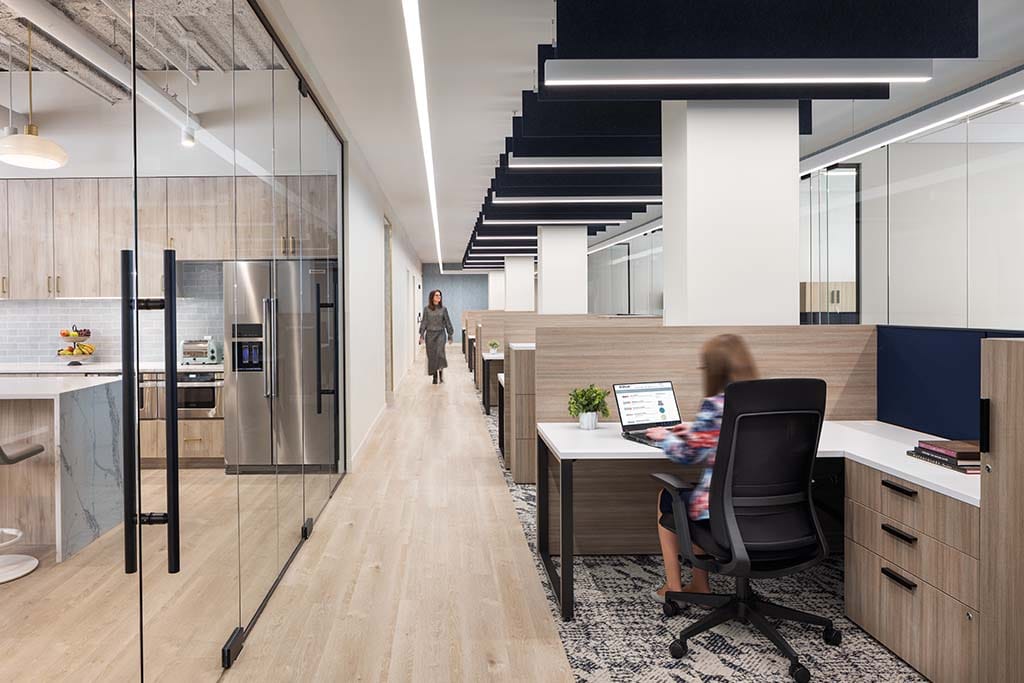
- Insufficient focus areas
- Overbooked meeting rooms
- Distracting open-plan layouts
- Technology that underperforms compared to home setups
- Spaces that feel corporate rather than intuitive
If employees leave an inviting, controlled home environment only to spend the day searching for a usable workspace, the commute feels like a waste. When the workplace is designed intentionally, that dynamic shifts. The office becomes a resource – not a requirement.
Designing an Office Worth the Commute
If employees are investing 223 hours annually to be on-site, the space must offer value they cannot access remotely. What does that look like? Here are some of our favorite future-ready office features:
Superior collaboration environments
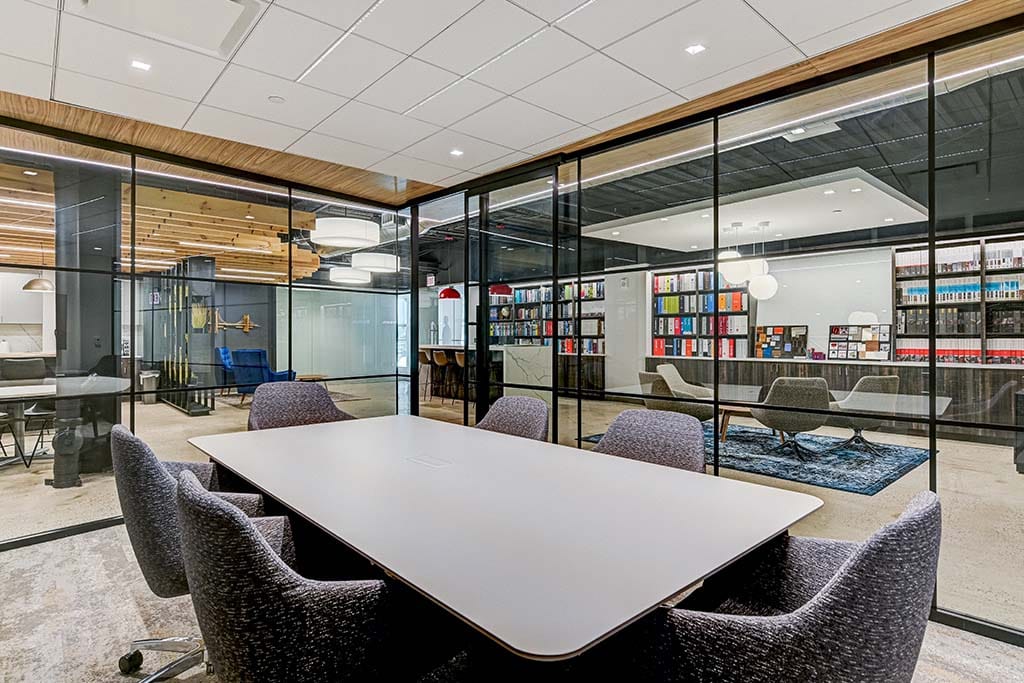
Purpose-built rooms with integrated technology that make meetings more efficient and more engaging than virtual alternatives.
This is where smart space planning makes the difference. It’s not about chasing trends, it’s about aligning layout, construction, and furnishings with how your people actually work. Our fully integrated design/build approach saves CEOs and facility teams the headache of having to juggle multiple vendors. With our client-friendly process, clients get one point of contact and one clear line of accountability, resulting in a risk-free and 30% faster project.
Dedicated focus zones
Quiet, acoustically-controlled spaces that support deep work without interruption.
Hospitality-inspired comfort
We’ve discussed it a lot – but café lounges, warm materials, varied seating, and intuitive layouts reduce cognitive load and improve your team’s daily experience.
Clear space choice
Environments that allow employees to move seamlessly between focused, collaborative, and social settings are the most productive.
Wellbeing integration
Natural light, greenery, improved air quality, and movement-supportive layouts make long days healthier and more sustainable.
In high-commute cities like New York, these elements are no longer “nice to have.” They’re a strategic must-have.
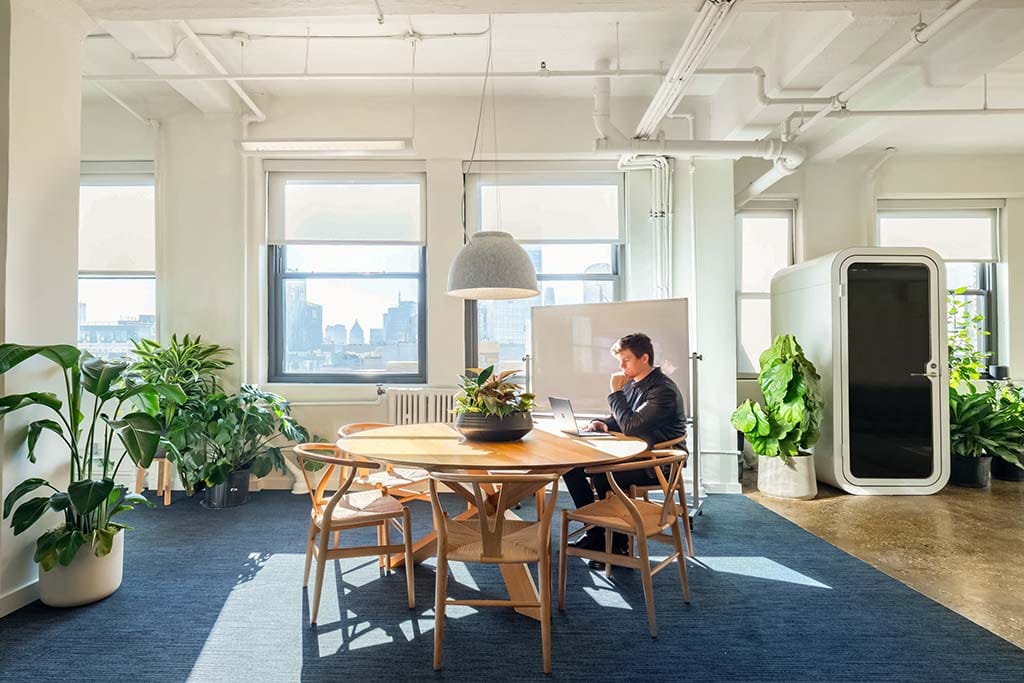
From Mandate to Magnet
The most successful NYC offices in 2026 are not relying on policy to drive attendance. They’re designing spaces people actively choose to use.
When done well, the office becomes:
- A collaboration accelerator
- A cultural anchor
- A productivity tool
- A space that supports focus better than home
However, this shift requires more than updated finishes or new furniture. It requires aligning layout, technology, construction, and experience from the start.
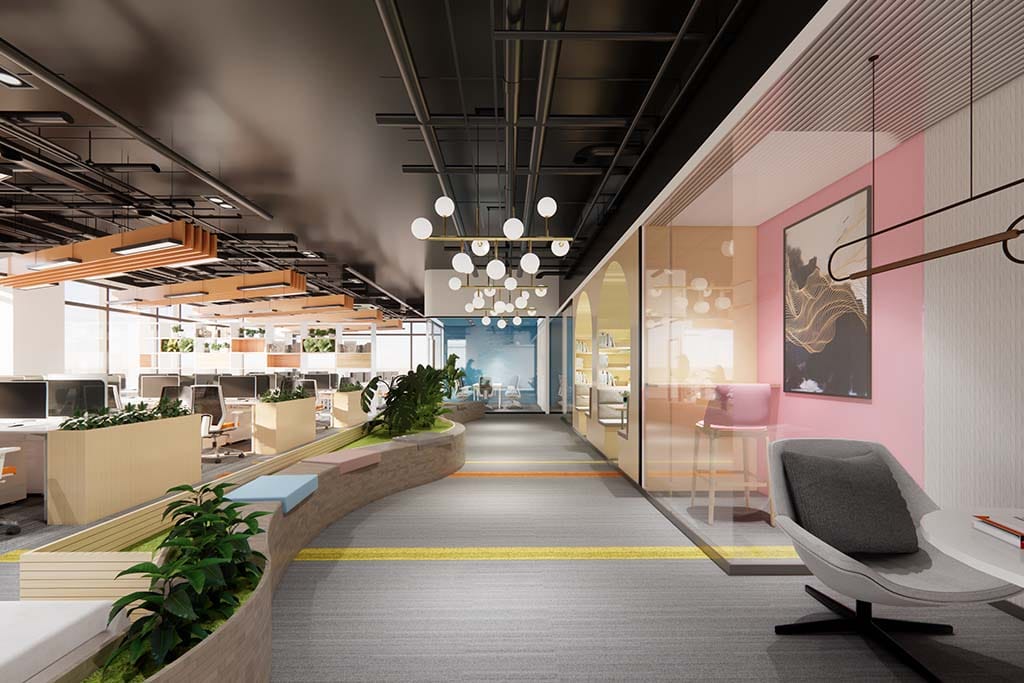
Designing Offices That Earn the Commute
The debate about return-to-office will continue.
But the organizations seeing the strongest engagement aren’t asking whether employees should come in.
They’re asking whether their workplace is compelling enough to justify the time investment.
If your team is spending hundreds of hours a year getting there, the space should work harder once they arrive. Ready to evaluate whether your office is earning its commute?
How RI’s Workplace Retreat Turns this Vision into Reality
The debate about return-to-office will continue.
But the organizations seeing the strongest engagement aren’t asking whether employees should come in.
They’re asking whether their workplace is compelling enough to justify the time investment.
If your team is spending hundreds of hours a year getting there, the space should work harder once they arrive. Ready to evaluate whether your office is earning its commute?